

The 12 DISC Personality Styles Explained
DISC identifies 12 distinct personality styles — four primary types and eight blend styles that reflect the influence of two adjacent behavioural dimensions. Knowing which style you or a colleague has helps you communicate more clearly, reduce friction, and work together more effectively.
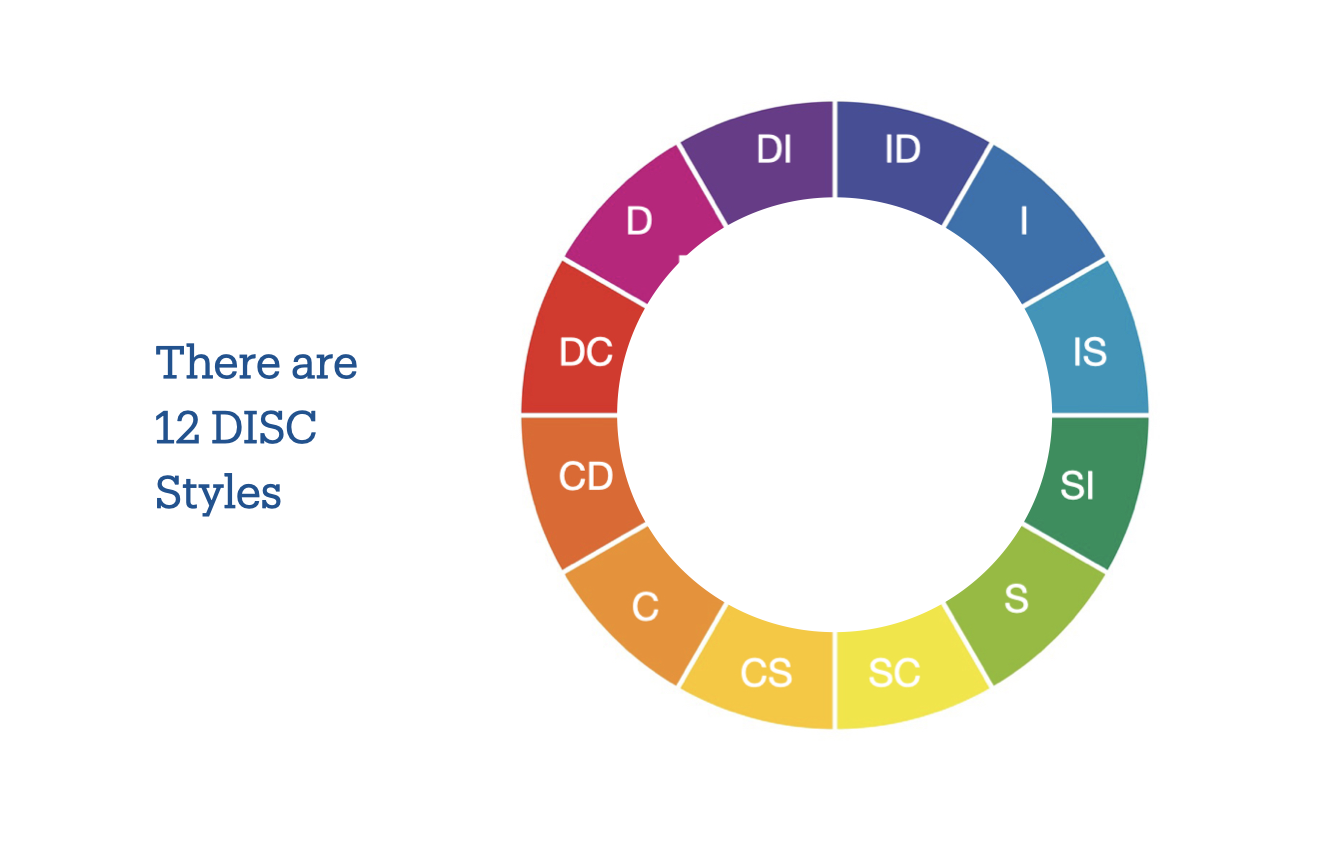
The Four Primary DISC Styles
DISC is built on four primary behavioural dimensions. Everyone's profile reflects one of these as their dominant style, and each has a distinct way of approaching work, decisions, and people.
The D Style — direct, results-focused, and comfortable taking charge. D styles drive change and make decisions quickly.
The i Style — enthusiastic, expressive, and energised by connecting with others. i styles bring energy and optimism to a team.
The S Style — patient, reliable, and committed to supporting the people around them. S styles are the steady backbone of most teams.
The C Style — precise, analytical, and focused on accuracy and quality. C styles work methodically and hold themselves to high standards.
For a full overview of the four primary types, see The 4 Main DISC Types.
The 8 DISC Blend Styles
Most people's profiles show a primary style with secondary influence from a neighbouring dimension on the DISC wheel — producing one of eight blend styles. Each blend has its own distinct combination of priorities, communication patterns, and workplace behaviours.
The DC Style
The DC style combines the D style's drive for results with the C style's analytical precision and high standards. DC styles are determined, exacting, and focused on doing things both quickly and correctly. Learn more about the DC style
The DI Style
The Di style combines the D style's ambition and pace with the i style's confidence and ability to influence others. Di styles are bold, persuasive, and energised by high-profile challenges. Learn more about the Di style
The ID Style
The iD style blends the i style's social energy and expressiveness with the D style's ambition and drive for breakthrough results. iD styles are passionate, outspoken, and motivated by recognition and forward momentum. Learn more about the iD style
The IS Style
The iS style combines the i style's warmth and enthusiasm with the S style's patience and genuine care for others. iS styles are friendly, optimistic, and natural relationship-builders who want everyone to feel included. Learn more about the iS style
The SI Style
The Si style blends the S style's quiet reliability with the i style's warmth and empathy. Si styles are loyal, service-oriented listeners who build trust steadily over time. Learn more about the Si style
The SC Style
The SC style combines the S style's dependability and patience with the C style's eye for accuracy and quality. SC styles are consistent, humble, and most effective when they have clear procedures and stable expectations to work within. Learn more about the SC style
The CS Style
The CS style blends the C style's analytical precision with the S style's steady, cooperative approach. CS styles work to exacting standards, prefer proven methods, and are valuable members of any team that requires both accuracy and reliability. Learn more about the CS style
The CD Style
The CD style combines the C style's focus on quality and logic with the D style's determination and directness. CD styles are rigorous, no-nonsense thinkers who hold both themselves and others to high standards. Learn more about the CD style
How DISC Styles Are Identified
Every DISC style is identified through the Everything DiSC Workplace assessment — a 20-minute online questionnaire that maps your behavioural priorities across the four DISC dimensions. The result is a personalised profile report showing your primary style, your dot placement on the DISC wheel, and how your style adapts under different conditions.
disc.co.nz offers individual and team DISC profile packages for New Zealand organisations, with facilitated debrief options available.
Using DISC Styles in the Workplace
Understanding DISC styles helps teams communicate across differences, reduce misunderstandings, and play to each other's strengths. The value isn't in putting people in boxes — it's in creating a shared language for how different people approach the same work.
For practical guidance on applying DISC in your team, see How to Use DISC Profiling in the Workplace and DISC for Teams.
Frequently Asked Questions
What are the 12 DISC personality styles?
The 12 DISC personality styles are the four primary styles (D, i, S, C) plus eight blend styles that combine adjacent dimensions: DC, Di, iD, iS, Si, SC, CS, and CD. Each blend style reflects the influence of two dominant DISC dimensions on a person's behavioural patterns at work.
What is the difference between the 4 DISC types and the 12 DISC styles?
The four DISC types are the primary behavioural dimensions — Dominance, Influence, Steadiness, and Conscientiousness. The 12 DISC styles include those four primary types plus eight blend styles. Most people's profiles show a dominant primary style with secondary influence from a neighbouring dimension on the DISC wheel. The blend styles capture the nuance of how those dimensions combine in practice.
How do I find out which DISC style I am?
Your DISC style is identified through a 20-minute online assessment. The assessment produces a personalised profile report showing your primary style, your dot placement on the DISC wheel, and how your behaviour shifts across different situations. See DISC profile packages to get started.
Get Your DISC Profile
Understanding your DISC style is the starting point for better communication, stronger teamwork, and more effective leadership. disc.co.nz provides Everything DiSC Workplace assessments for individuals and teams across New Zealand, with full debrief support available.