Introduction to DISC – DISC Profiling Explained
A DISC profile is a behavioural assessment that explains how you naturally communicate, make decisions, and work with others at work.
It introduces the four DISC styles – Dominance, Influence, Steadiness, and Conscientiousness – and gives you a practical language for understanding behaviour in everyday workplace situations.
Why DISC Profiles Help at Work
A DISC profile gives people a shared language for understanding communication style, decision-making, pace, and workplace preferences. That makes DISC useful for team workshops, leadership development, communication training, and one-to-one reflection after a profile is completed.
You can continue by learning how to read your DISC report, exploring DISC for leaders and teams, or choosing the right package for an individual or group.
Ready to explore the next step? Visit our DISC Profile Pricing & Team Workshop Packages page to compare options for individuals, teams, and leaders in New Zealand.
Here’s How DISC Works (in 4 minutes)
This short video introduces DISC profiling and explains how a DISC profile measures everyday workplace behaviour across four styles, helping individuals, teams, and leaders communicate and work together more effectively in New Zealand.
What Is DISC Profiling?
DISC profiling is a behavioural assessment framework used to help people understand how they tend to respond to challenge, influence others, pace their work, and approach rules or detail. Rather than placing people into fixed personality boxes, a DISC profile describes observable behaviour patterns that can be understood, discussed, and adapted in the workplace.
If you are new to the model, a good next step is to read more about the science behind DISC and how a DISC assessment is used in practice.
The Four DISC Styles
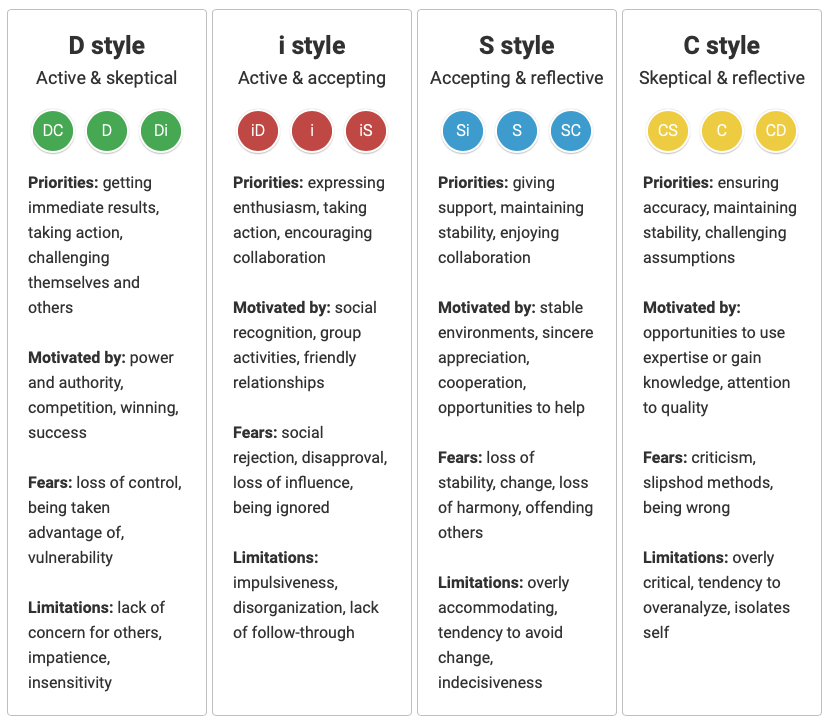
Everyone shows elements of all four DISC styles, but most people have one or two styles that feel more natural and consistent over time. The four styles describe broad behavioural preferences — they are not labels for ability, intelligence, or value.
Dominance — often direct, fast-paced, and focused on results.
Influence — often expressive, enthusiastic, and focused on people.
Steadiness — often patient, dependable, and focused on cooperation.
Conscientiousness — often careful, analytical, and focused on accuracy.
Explore the 4 DISC Styles in detail or see their key traits here …
The Key Traits of the 4 DISC Types